ServicesContingency & Continuity Planning
Contingency & Continuity Planning in Garland
If you or a co-owner were out tomorrow, your company would need someone with authority to sign, a fair price for your shares and cash to pay it. We find where those pieces fail to connect and help you close each gap before it matters.
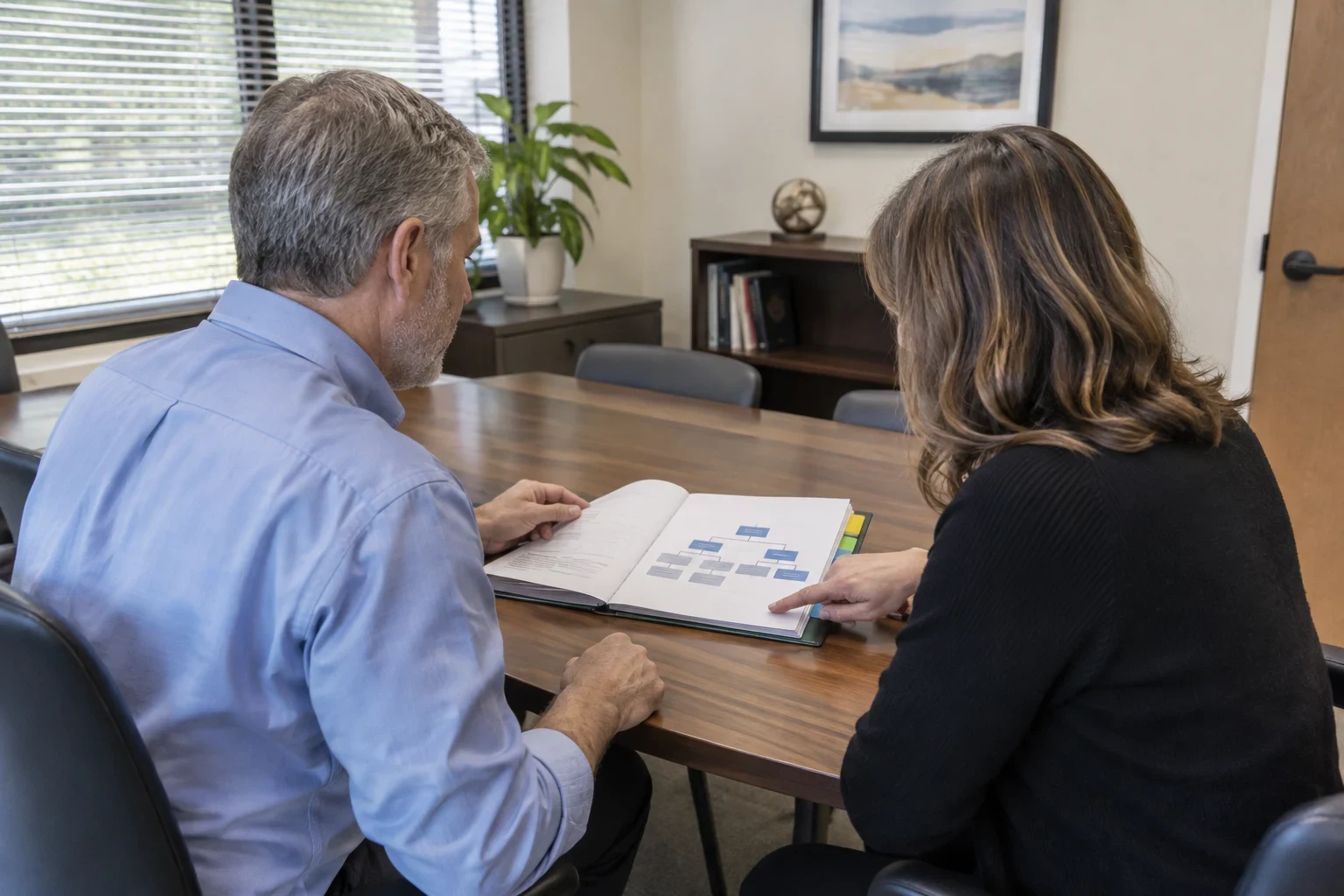
What a continuity plan actually covers
A contingency plan settles one practical matter: who runs the company, and who owns it, if an owner dies, becomes disabled or walks away. Most owners we meet have part of an answer. There is a will, maybe a buy-sell agreement drafted when the company was half its current size, and a key-person policy nobody has priced since. The real risk sits in the space between those documents.
We build the plan around the small details that decide whether it works on the day it is needed. Does the buy-sell price formula still match what your company is worth? Will the insurance proceeds actually fund the purchase, and is the policy owned by the right party? Does a second person have authority on the operating account and the credit line? We work alongside your attorney and CPA, who draft and file the legal and tax pieces.
This work is the right call when you have partners, a personal guarantee on company debt, a team that depends on you for daily decisions, or family who would inherit a business they have never run.

What we review and build
- 01
Buy-sell agreement review
We read the triggers (death, disability, divorce, departure), the price formula and the payment terms. A fixed price written ten years ago, or a formula based on book value, can leave a surviving partner or a spouse badly shortchanged.
- 02
A valuation the agreement can use
We prepare a current business valuation and show how it compares with the number your agreement would produce today. Where the two are far apart, we flag it for you and your attorney.
- 03
Funding check
We compare life and disability coverage against the buyout amount, then confirm who owns each policy and who the beneficiary is. A policy owned by the wrong entity can send the money somewhere the agreement never intended.
- 04
Authority and access map
We list every bank signer, lender covenant, personal guarantee, payroll login and key vendor contract. Then we name who steps in on each one, so nothing freezes because only one person holds the password or the signature card.
- 05
Interim leadership plan
A written outline of who makes which decisions for the first 90 days, what key customers and lenders are told, and where the plan and documents are kept.
Questions about Contingency & Continuity Planning?
Call(972) 521-4609Signs your company needs a continuity plan
Your buy-sell price is out of date
If revenue or profit has grown since the agreement was signed, the price in it probably no longer reflects what the shares are worth.
Only you can sign
When you are the only authorized signer on the operating account or the line of credit, payroll can stall within days of an unexpected absence.
You guaranteed the company's debt
Lenders often treat an owner's death or disability as a default event. Your family should know how that loan would be handled.
Partners have different assumptions
Ask each co-owner what happens to a departing partner's shares. If the answers differ, the agreement is either unclear or not being followed.
Family would not know where to start
If your spouse or children could not name your attorney, your banker and your second-in-command, the plan is still in your head.
How the work runs
- 1
First call and free valuation
You tell us about your company, your ownership structure and what worries you. We start with a free business valuation so the rest of the plan rests on a current number. There is no pressure, and no obligation to sell.
- 2
Confidential document gathering
You send the operating or shareholder agreement, buy-sell terms, insurance policies, loan documents and an org chart. Everything stays confidential; employees do not need to know the work is happening.
- 3
Gap review
We meet at our office or by video and walk through a written list of every gap we found, ranked by how much damage it could cause and how simple it is to close.
- 4
Build, coordinate and hand off
We work with your attorney, CPA and insurance agent on the changes, then assemble the plan in one place and brief the people named in it. We suggest a review each year, or sooner after a big change in value or ownership.
What moves the cost
The fee depends on how much needs to be fixed, not on a flat package. A single-owner company with clean documents takes far less work than a three-partner firm with an expired agreement and several loans. We explain the scope on the phone before any engagement begins.
- Number of owners
- Each additional owner adds triggers, funding questions and conversations that have to line up.
- Condition of existing documents
- A current, well-drafted buy-sell agreement needs review. A missing or outdated one needs a full rebuild with your attorney.
- Debt and guarantees
- Multiple lenders, SBA loans or personal guarantees mean more covenants to read and more parties to plan around.
- Entities and locations
- Holding companies, separate real estate entities or more than one operating location each add authority and ownership details to map.
Contingency and continuity planning questions
Selling isn't on my radar. Why would I plan for an exit now?
Because the exits that cause the most damage are the ones nobody picks. A death, a disability or a falling-out between partners can move ownership overnight. A written plan is what keeps that handoff orderly instead of leaving your family and staff to sort it out under pressure.
We already have a buy-sell agreement. Isn't that enough?
It is a good foundation, though we regularly see a stale price, funding that falls short or triggers that skip disability entirely. We measure the agreement against a current valuation and the insurance you actually carry. That tells you whether it would work as written on the day it is needed.
Do you draft the legal documents?
No. Your attorney drafts and finalizes the agreements, and your CPA covers the tax side. Our part is finding the gaps, providing the valuation and the numbers, and keeping everyone working from the same figures so the documents fit together.
Will my employees find out?
Not unless you choose to tell them. We deal directly with you and your outside advisors, and the work stays confidential. Once the plan is finished, you decide who gets briefed and when.
How long does the work take?
Timing mostly comes down to how fast documents arrive and how quickly your attorney turns around revisions. Owners with organized records move through the process much sooner than those whose policies and agreements first have to be located.
Can you help if my company isn't based in Garland?
Yes. Many of the owners we work with run companies in Rowlett, Richardson, Plano, Mesquite and the towns around them. You can sit down with us in person at our office, or we can cover everything over a phone or video call if driving in is not practical.

Find the gaps while you can still fix them
Start with a free valuation of your company and a clear look at whether your current agreements would hold up. There is no pressure, and no obligation to sell.